
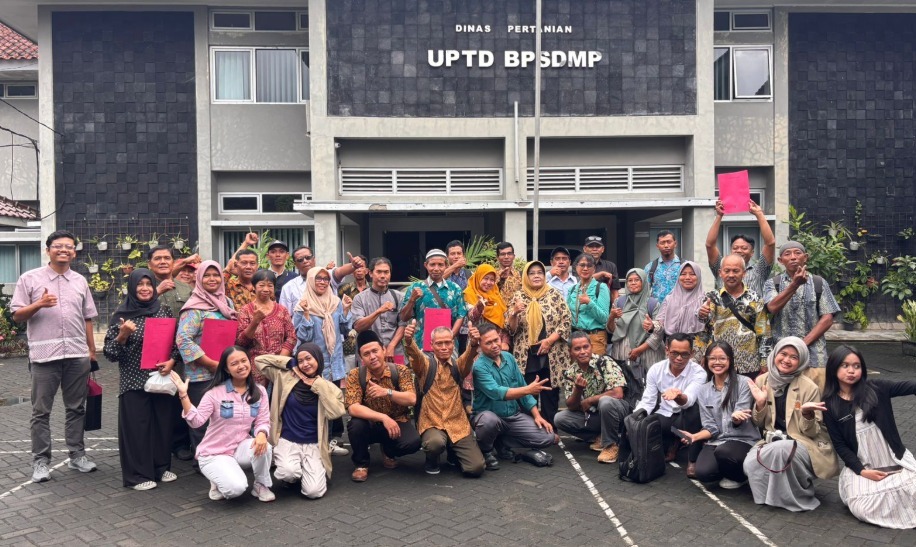
Students of the Agricultural Extension and Communication (BAEC) Study Program, class of 2023, Faculty of Agriculture, Gadjah Mada University (Faperta UGM), participated in the Merdeka Belajar Kampus Berdampak (MBKB) program through mentoring in Climate Change Mitigation and Adaptation Training for Independent Agricultural Extension Workers. This intensive activity took place for five days on April 6–10, 2026, at the UPTD Center for Agricultural Human Resources Development (BPSDMP) Jaranan, Panggungharjo, Sewon, Bantul, as well as through field visits to the Yogyakarta Agency for Meteorology, Climatology, and Geophysics (BMKG DIY) Climatology Station and Rejo Farm, Sleman.
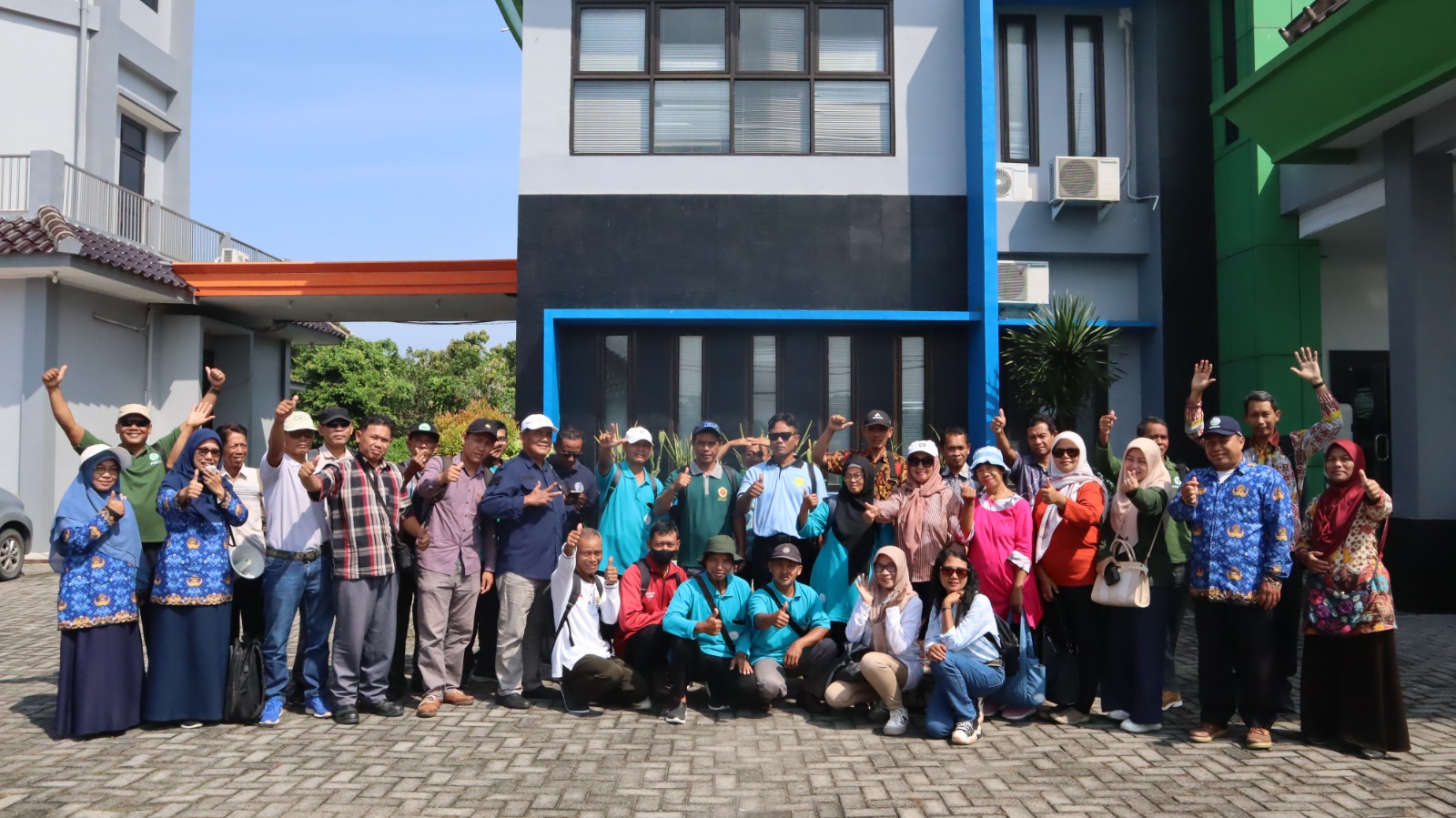
Five UGM PKP students, Adelita Regina Cahyani, Meilany Adi Susilowati, Dewi Sarah Azzahra, Virgie Salsa Dewanty Ansani, and Afifah Sinta Hayuningrum, were actively involved in assisting the training. The program, organized by the UPTD BPSDMP of the Yogyakarta Department of Agriculture and Food Security, was attended by 30 independent extension workers from five regions in the Special Region of Yogyakarta, with between two and thirteen years of service experience.
This training is designed to strengthen the capacity of extension workers to address the real impacts of climate change on the agricultural sector, from shifting planting seasons and increased pest infestations to the risk of flooding and drought. Students act as facilitators, performing various tasks, including participant administration, documentation, discussion facilitation, mentoring resource persons, emceeing, and evaluating activities.
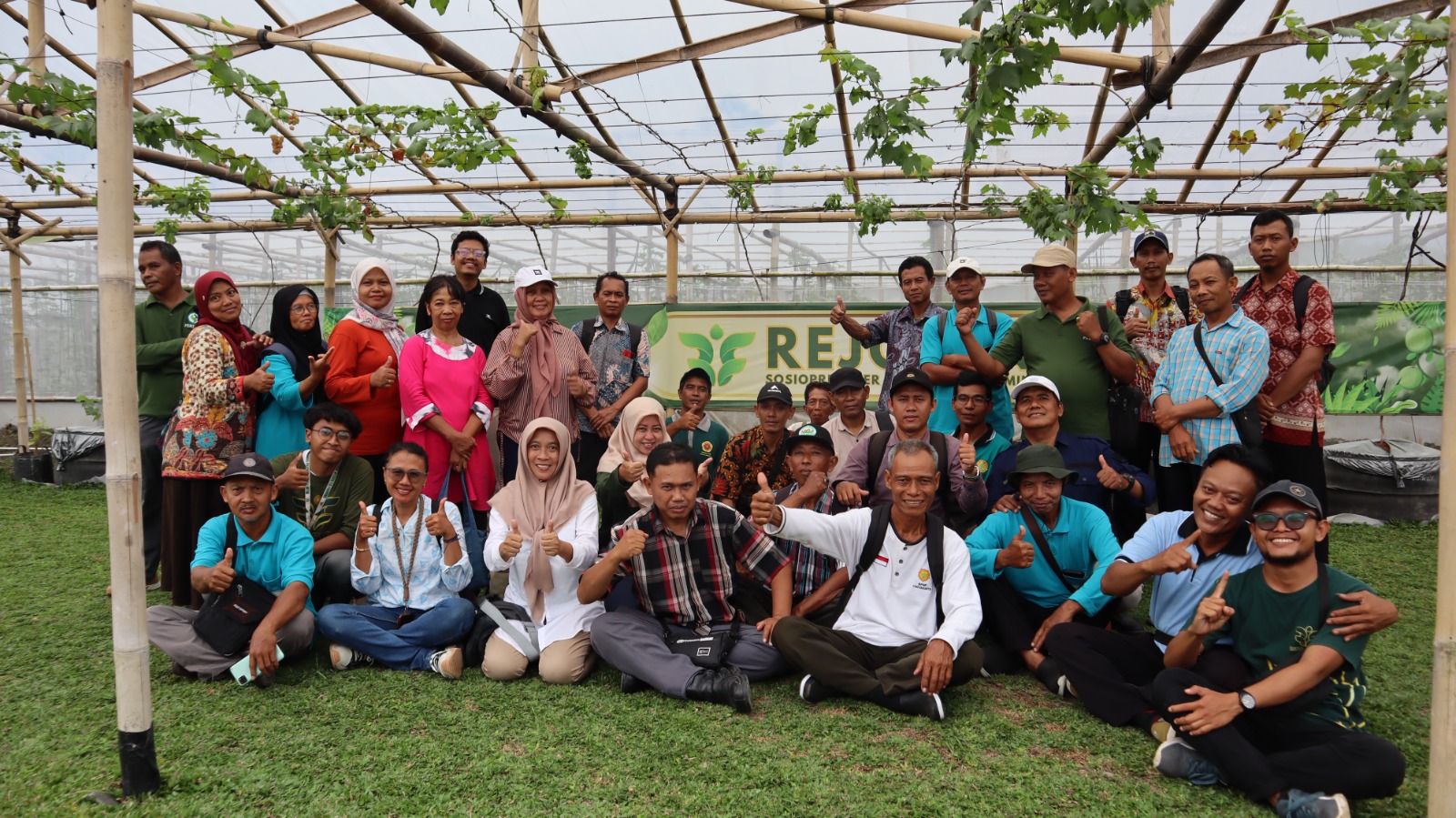
Through hands-on involvement, students gain practical experience in managing agricultural human resource capacity development programs while honing their communication, training management, and public relations skills. Virgie Salsa Dewanty Ansani said, “The opportunity to speak directly with the extension workers was the most memorable experience. The stories they shared opened up new insights into real-world conditions not always learned in class.”
For five days, participants received material from speakers from various institutions:
- First day: agricultural development policies facing extreme climates and climate change projection analysis by BMKG DIY.
- Day two: greenhouse gas emissions, water harvesting technology, and adaptive cultivation with BRMP Yogyakarta.
- Day three: the impact of climate change on plant pests and soil ecology by lecturers from the Faculty of Agriculture, UGM.
- Day four: field visit to BMKG DIY and Rejo Farm to learn about climate monitoring and greenhouse technology.
- Fifth day: material on Pranata Mangsa and group dynamics by practitioners, as well as preparation of a Follow-up Action Plan (RTL).
Evaluation results showed that several participants had implemented the training materials, including socialization of BMKG climate forecasts for determining planting times, the application of drip irrigation technology, the construction of field wells, and the production of local microorganisms (MOL) to reduce dependence on chemical fertilizers. Mukhlis Abdullah, an extension worker from Kulon Progo, stated that his farmer groups welcomed the information because it offered practical solutions to address farming risks.
This mentoring activity not only enriches students’ off-campus learning experiences but also strengthens the capacity of extension workers as learning agents and farmer facilitators in addressing climate change. Collaboration among universities, local governments, and agricultural extension workers contributes to the achievement of SDG 2: Zero Hunger, SDG 4: Quality Education, SDG 6: Clean Water and Sanitation, SDG 8: Decent Work and Economic Growth, SDG 12: Responsible Consumption and Production, SDG 13: Climate Action, SDG 15: Life on Land, and SDG 17: Partnerships for the Goals.
Authors: Beny Nabila Happy Fauziah
Editor: Tantriani
Documentation: Afifah Sinta Hayuningrum and Adelita Regina Cahyani