
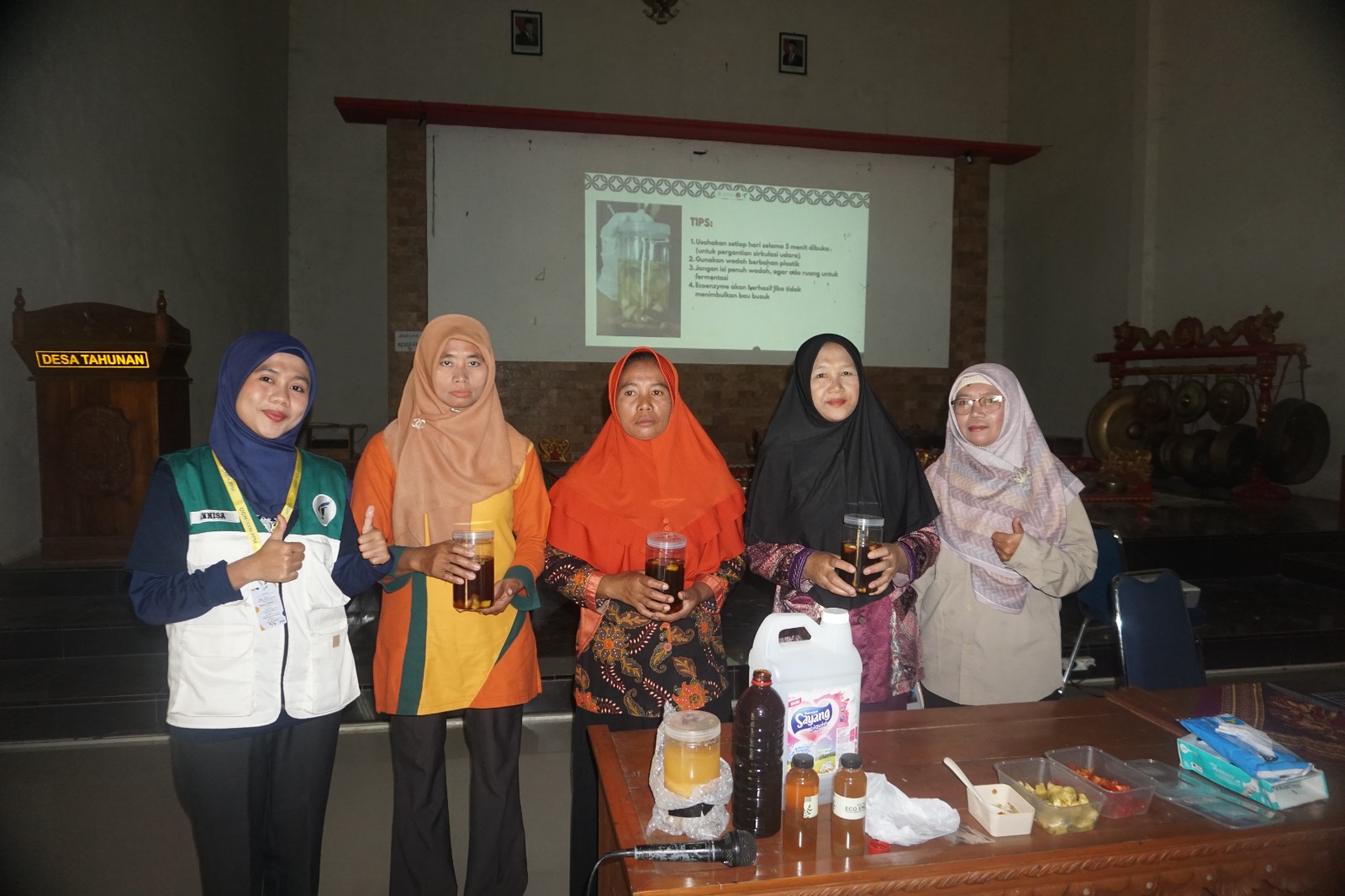
The KKN-PPM Team of Gadjah Mada University (UGM) Langkara Talambo Period II in 2026 implemented a work program entitled “Ngolah Sisa, Njaga Rasa” with the Sumber Waras Women Farmers Group (KWT) at the Tahunan Village Hall, Nanggungan Hamlet, Tegalombo District, Pacitan Regency on July 20, 2026. This activity was initiated by Annisa Hizriani Faudina, a student of the Agricultural Microbiology Study Program class of 2023, as a real form of community service in increasing awareness of household organic waste management.
This program introduces the concept of eco-enzymes, a liquid fermented from organic waste, sugar, and water that offers a variety of benefits, ranging from liquid organic fertilizer and natural cleaning products to supporting environmentally friendly agricultural practices. Through educational and hands-on practice, participants are expected to be able to independently process organic waste, so that it is no longer viewed as trash to be discarded, but rather as a valuable resource.

The event began with a presentation on the definition of eco-enzymes, their benefits, ingredient composition, and fermentation stages. The discussion was interactive, as most participants were new to the concept. Enthusiasm was evident in the numerous questions about the types of waste that can be used, fermentation times, and the characteristics of a successful product.
Following the socialization session, participants participated in a hands-on experience making eco-enzymes using organic waste such as fruit and vegetable peels, brown sugar, and water. The process of preparing the ingredients, mixing them, and packaging the fermentation solution was carried out collaboratively, providing participants with hands-on experience and the confidence to try it independently at home.
The enthusiasm of the Sumber Waras Women Farmers Group (KWT) members demonstrates the community’s interest in simple, easy-to-implement innovations utilizing locally available materials. This program also provides a platform for sharing experiences between KKN students and the community regarding the importance of sustainable organic waste management.
Through the “Ngolah Sisa, Njaga Rasa” program, the UGM Langkara Talambo Community Service (KKN-PPM) Team hopes that the residents of Tahunan Village will develop new habits of processing organic waste into useful products. This effort not only maintains environmental cleanliness but also supports the principles of a circular economy and provides tangible benefits to households and the agricultural sector.
This program supports the achievement of several Sustainable Development Goals (SDGs), including SDG 3: Good Health and Well-Being, SDG 11: Sustainable Cities and Communities, SDG 12: Responsible Consumption and Production, SDG 13: Climate Action, and SDG 15: Life on Land.
Author: Annisa Hizriani Faudina, Beny Nabila Happy Fauziah
Editor: Tantriani
Documentation: UGM KKN-PPM Team, Langkara Talambo