

The Faculty of Agriculture, Universitas Gadjah Mada (Faperta UGM), continues to strengthen its commitment to the internationalization of education through the ASEAN International Mobility for Students (AIMS) program. Asayari Puspita Gutama, a 2023 student of the Agronomy Study Program, had the opportunity to participate in a student exchange at the Tokyo University of Agriculture and Technology (TUAT), Japan, for approximately 3.5 months, from September to December 2025.

During her time at TUAT, Asayari enrolled in 18 courses totaling 18 credits, as the system there assigns 1 credit for each course taken by exchange students. She noted that the learning system was quite different from Indonesia, particularly because many courses were accompanied by field visits. This provided students with the opportunity to directly observe the application of the material being studied, thereby strengthening practical understanding and enriching academic experience.
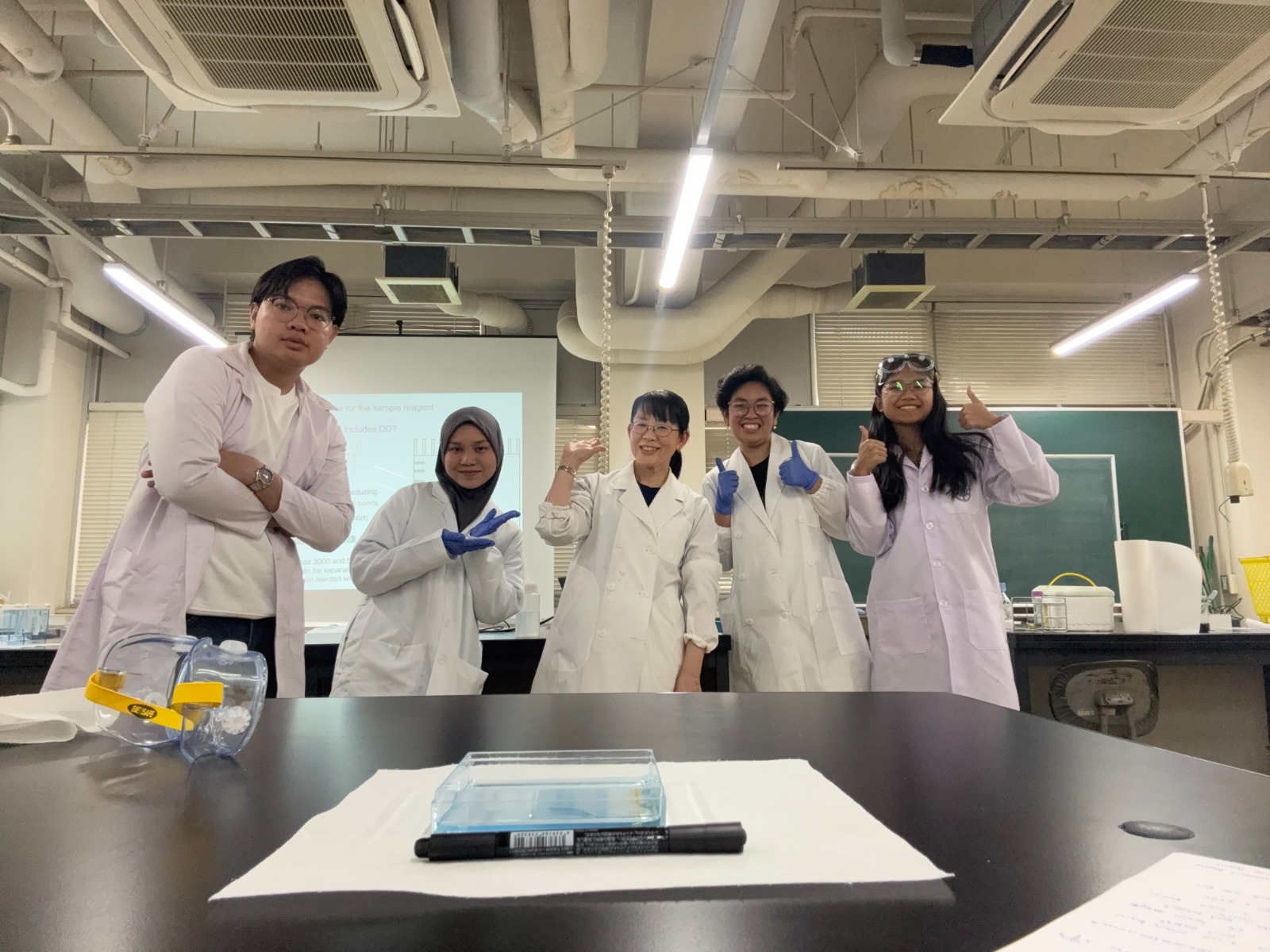
Beyond academics, Asayari also gained memorable cultural insights. She highlighted the politeness of Japanese society and the neatness of its environment. “One thing that truly surprised me was how drivers highly respect pedestrians. For example, when someone intends to cross at a zebra crossing, cars will stop and wait until the pedestrian has finished crossing,” she explained.

The main challenge she faced was the extreme seasonal differences compared to Indonesia. The hot temperatures during summer and the cold weather approaching winter required physical adjustment. In addition, walking activities were far more frequent than in Indonesia. “In Jogja, I rarely walked long distances, but in Japan I walked at least around 3 km every day,” she added.
Asayari expressed her appreciation to the Faculty of Agriculture UGM, which consistently supports students in the AIMS program. The faculty actively facilitated communication between the host university and students, and was responsive in providing assistance and clarification whenever questions or challenges arose during preparation and implementation.
As a closing note, Asayari encouraged other students interested in joining AIMS. “Don’t hesitate to try. This program offers many new experiences, both academically, culturally, and personally. Students can learn different education systems, meet friends from various countries, and develop independence and adaptability in new environments. These experiences are truly valuable and can become one of the best moments during your studies,” she said. She also quoted Lao Tzu “A journey of a thousand miles begins with a single step”
Asayari’s participation in the AIMS program also contributes to the achievement of the Sustainable Development Goals (SDGs), particularly SDG 4: Quality Education, SDG 10: Reduced Inequalities, SDG 12: Responsible Consumption and Production, SDG 13: Climate Action, SDG 15: Life on Land, and SDG 17: Partnerships for the Goals.
Author: Beny Nabila Happy Fauziah
Editor: Tantriani
Documentation: Asayari Puspita Gutama