
The Student Creativity Program (PKM) is a prestigious competition organized by the Ministry of Education, Culture, Research, and Technology to enhance the quality of students, enabling them to become academically capable individuals who can apply, develop, and disseminate knowledge, technology, arts, and national culture.
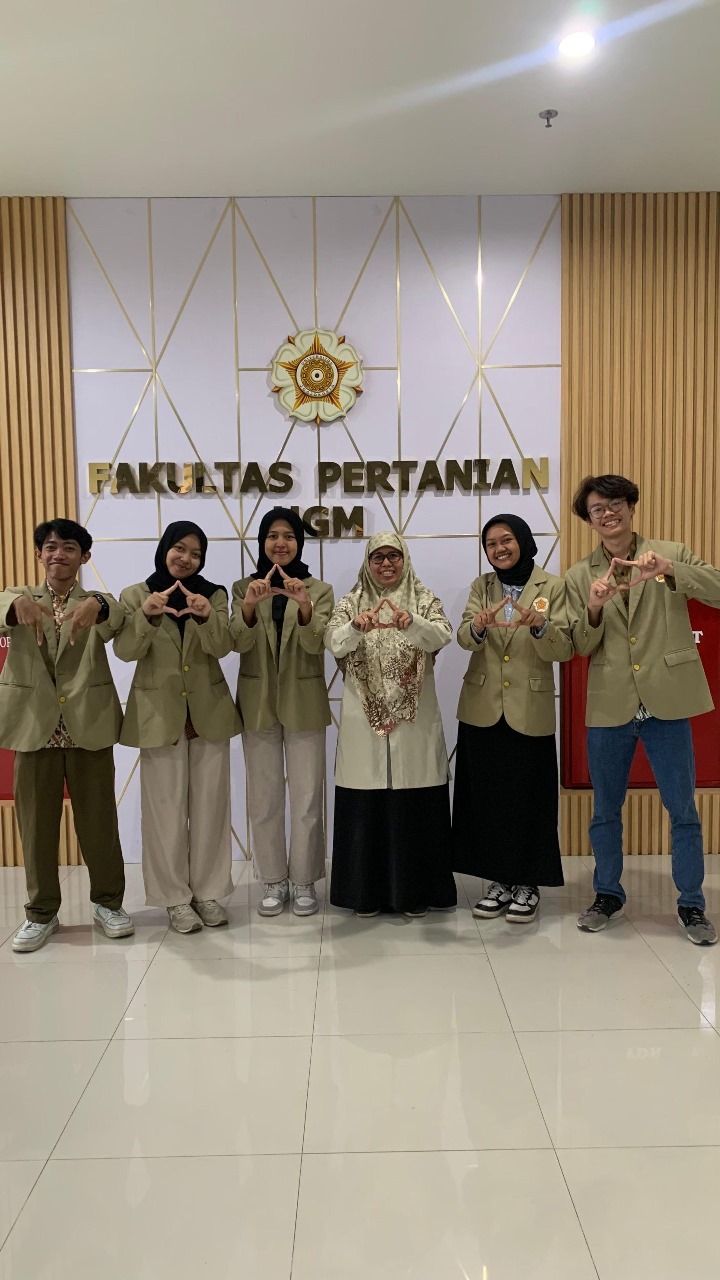
One of the outstanding projects funded under the Entrepreneurship category (PKM-K) is “EcoPrime Feed: Innovation in Utilizing Invasive Species as High-Quality, Affordable, and Eco-Friendly Fish Feed.” This project is led by Gerson Lewis (Aquaculture 2023), along with team members Aimmatul Husna (Aquaculture 2023), Sevina Surya Wibianti (Aquaculture 2023), Muhammad Jibril Syahid (Aquatic Resource Management 2023), and Jihan Tsabitha (Regional Economic Development 2022), under the supervision of Dr. Senny Helmiati, S.Pi., M.Sc., a lecturer from the Department of Fisheries, Faculty of Agriculture UGM (Faperta UGM).
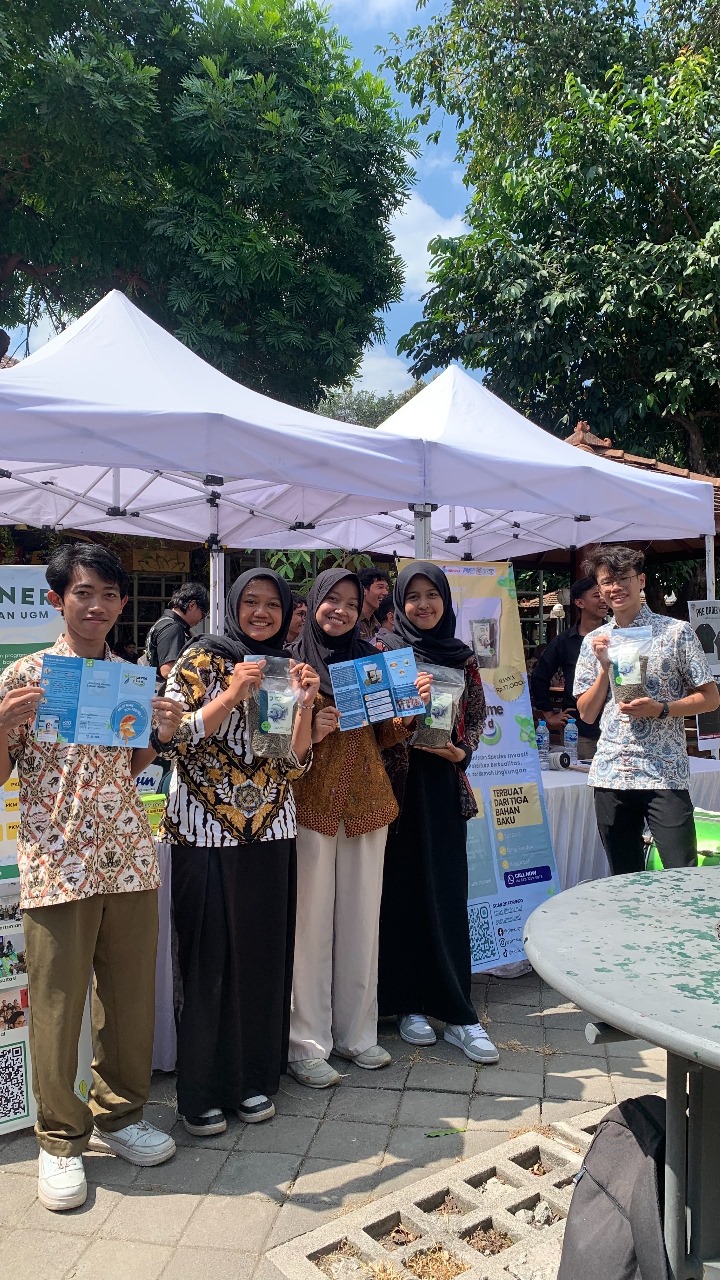
The EcoPrime Feed initiative was driven by environmental issues in Indonesia’s aquatic ecosystems, which are increasingly dominated by invasive species. These species disrupt ecosystem balance due to uncontrolled population growth. One major example is water hyacinth, which spreads rapidly and negatively impacts aquatic biodiversity. Another is the red devil fish, an aggressive predator that multiplies quickly and threatens native fish species. Additionally, the rising volume of food waste has become a concern, as it contributes to resource scarcity despite still being potentially useful. To address this, the EcoPrime Feed team utilizes Black Soldier Fly (BSF) larvae through a bioconversion process, transforming food waste into a sustainable fish feed alternative.
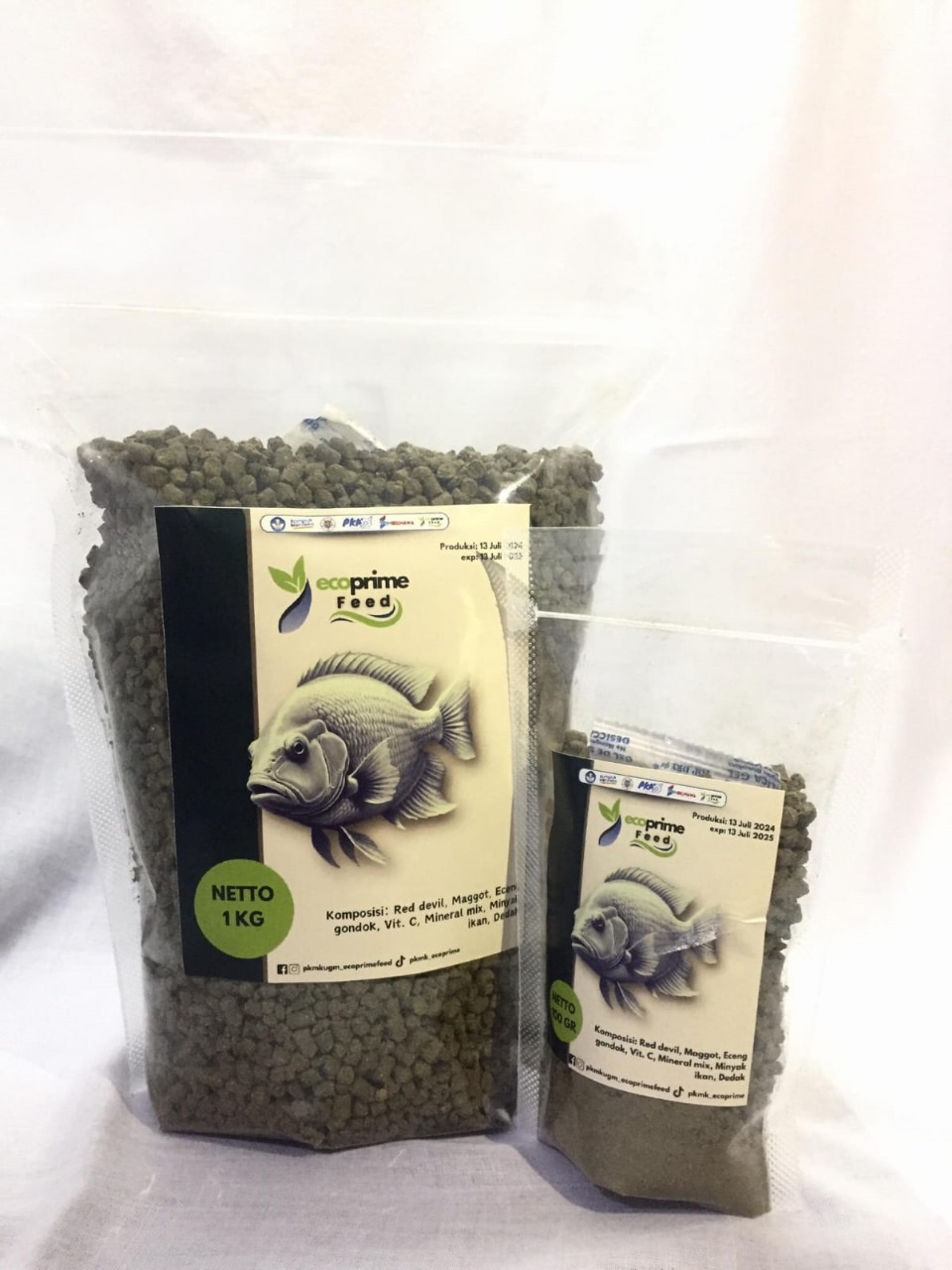
The PKM-K EcoPrime Feed team innovated a high-quality, cost-effective, and eco-friendly fish feed by combining three main ingredients: Water hyacinth: After fermentation, it contains high protein and low crude fiber, Red devil fish: Contains 35% protein and a natural fish-attracting scent, and BSF maggots: Rich in 40-50% protein with essential digestive enzymes for fish. This innovative product not only stabilizes Indonesia’s aquatic ecosystems but also offers a solution to the rising cost of fish feed in aquaculture.
The EcoPrime Feed team is thrilled to advance to the 37th National Student Scientific Week (PIMNAS) and hopes for continued support to bring home a medal and scale their product for public use. “We are incredibly proud to qualify for PIMNAS-37. With strong support, we aim to win a medal and expand our product’s reach to the wider community,” said Lewis in an interview on Saturday, 31 August 2024.
The EcoPrime Feed project embodies the UGM Faculty of Agriculture’s commitment to global sustainability through the Sustainable Development Goals (SDGs): SDG 1: No Poverty, SDG 2: Zero Hunger, SDG 12: Responsible Consumption and Production, SDG 14: Life Below Water, and SDG 17 : Patnership for the goals.
Author: Gerson Lewis, Ghorizatu Shofra
Editor: Desi Utami