• About UGM
  • Library
  • Indonesian Version
Universitas Gadjah Mada Faculty of Agriculture
Universitas Gadjah Mada
  • Home
  • About Us
    • Welcome
    • Overview
    • Vission and Mission
    • Facilities
      • Facilities
      • AGROTROPICA LEARNING CENTER UGM
    • Organization
    • Profile of Lecturers
    • Contact Us
    • LECTURERS EVALUATION RESUME BY STUDENTS
      • Lecturers Evaluation Resume by Undergraduate Students
      • LECTURERS EVALUATION RESUME BY POSTGRADUATE STUDENTS
      • Standard Operating Procedure – Lecturers’ Evaluation By Students
      • Arrangement of the Improvement Progress Report Lecturers Evaluation Resume by Students
      • Study Program Follow Up Link
    • Summary Of Strategic Plan 2022-2027
  • Department
    • Department of Agricultural Microbiology
    • Departmen of Plant Protection
    • Department of Social Agricultural Economics
    • Department of Fisheries
    • Department of Soil Science
    • Department of Agronomy
  • Program
    • International Collaboration
  • About Yogyakarta
    • Cost of Living
    • Visas as International Students
    • Living and Studying in Yogyakarta
  • Download
  • Beranda
  • news
  • Scientific Synergy: Faculty of Agriculture UGM and FIMAR Research AMR (Antimicrobial Resistance) Risks in the Agricultural Sector

Scientific Synergy: Faculty of Agriculture UGM and FIMAR Research AMR (Antimicrobial Resistance) Risks in the Agricultural Sector

  • news
  • 14 April 2025, 07.21
  • Oleh: agusrn
  • 0

The Faculty of Agriculture at Universitas Gadjah Mada (Faperta UGM), led by Prof. Dr. Ir. Siti Subandiyah, M.Agr.Sc., has established a research collaboration with the Finnish Multidisciplinary Centre of Excellence in Antimicrobial Resistance Research (FIMAR), under the leadership of Prof. Marko Virta. This partnership focuses on the pressing issue of Antimicrobial Resistance (AMR) in agriculture and its sociological impacts, particularly within the Special Region of Yogyakarta. AMR is a growing global concern where microorganisms become resistant to antimicrobials, including antibiotics. In agriculture, this resistance can affect livestock health and productivity, with the potential to transmit to humans through the food chain. The study therefore aims to investigate how AMR influences agricultural practices and community life across urban, suburban, and rural settings.
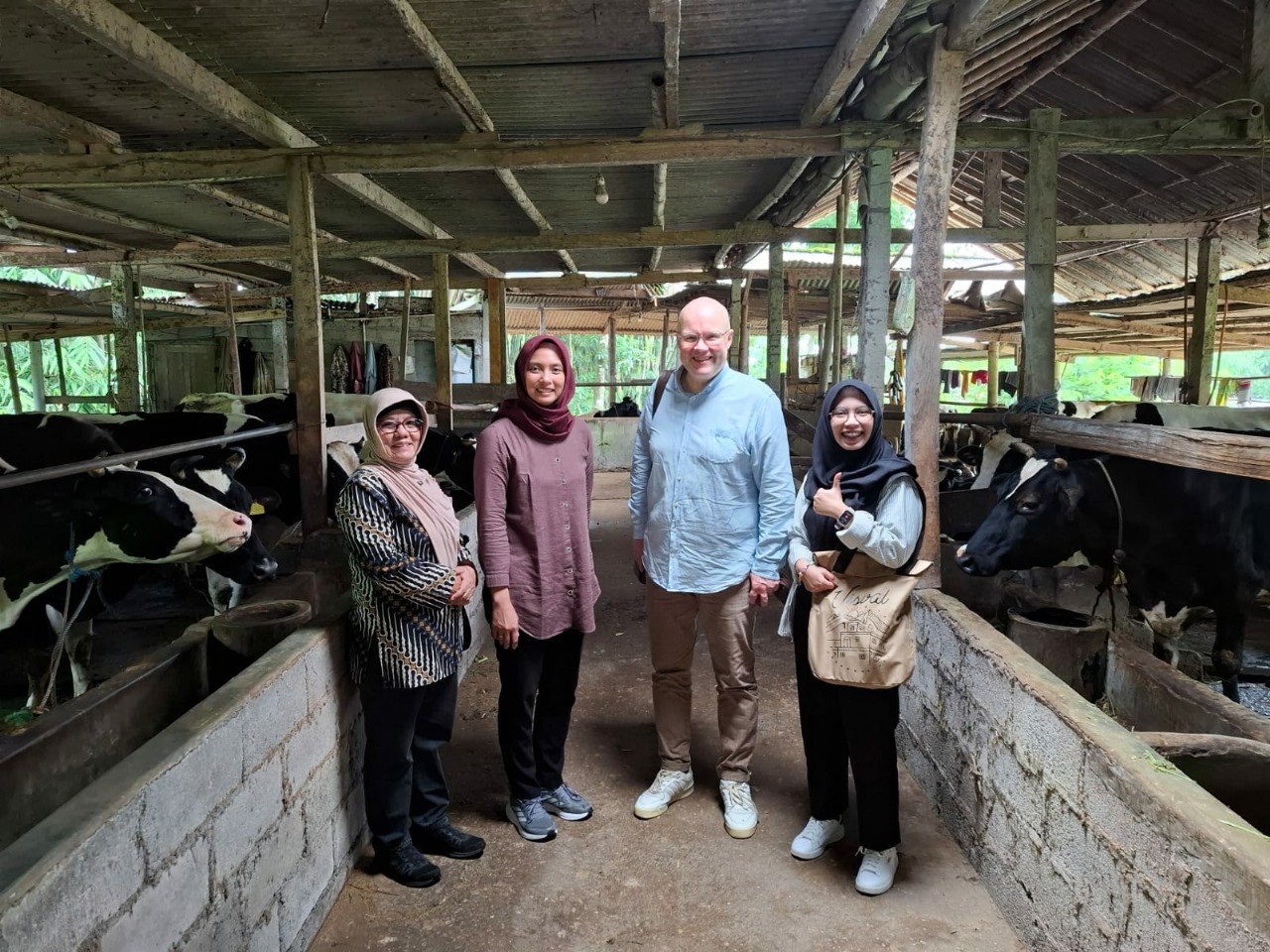
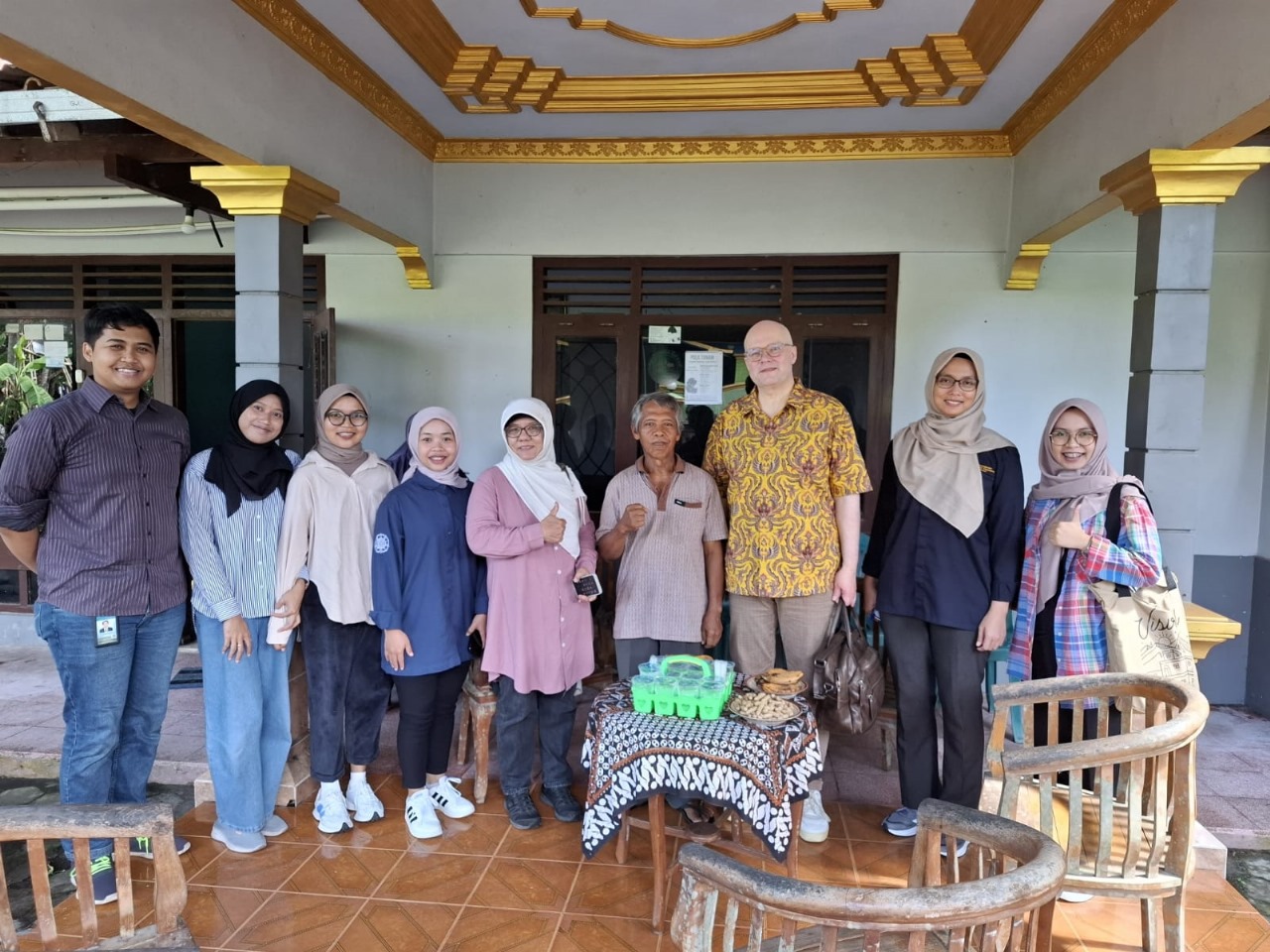
The research initiative stems from discussions held in 2023 to outline the collaboration’s roadmap. In 2024, the focus shifted toward planning data collection, beginning with a pre-survey conducted from December 11 to 13 in several strategic areas. These included coastal zones (highlighting agricultural and shrimp farming activities), Berbah and Sewon (representing urban settings near wastewater treatment facilities), and Pakem (a rural area practicing traditional farming methods).

This study examines AMR from several dimensions: sustainable cultivation practices, DNA extraction to analyze microorganisms and resistance traits, water filtration in agricultural systems, a public perception survey (IHH Survey) to assess awareness about AMR, and a policy and agency study to evaluate current regulations on antimicrobial usage in agriculture.

Through this multidisciplinary approach, the collaboration between Faperta UGM and FIMAR is expected to generate valuable insights into the risks and impacts of AMR within the agricultural sector and inform more effective policy recommendations. Ultimately, the project contributes to the achievement of Indonesia’s Sustainable Development Goals (SDGs), particularly SDG 1: No Poverty, SDG 2: Zero Hunger, SDG 3: Good Health and Well-being, SDG 4: Quality Education, and SDG 17: Partnerships for the Goals.

Writer: Rani Nur Rochim, Ghorizatu Shofra
Editor: Desi Utami


Tags: SDG 1: No Poverty SDG 17: Partnerships for the Goals SDG 2: Zero Hunger SDG 3: Good Health and Well-being SDG 4: Quality Education

Recent Posts

  • UGM Faculty of Agriculture Guest Lecture Explores Duckweed Innovation: From Waste to Future Food
  • Pre-Course Session Opens UGM Faculty of Agriculture’s 2025 Summer Course: A First Step Toward Understanding Sustainable Tropical Agriculture
  • Robusta Coffee Harvest Festival in Gunung Gambar, A Tangible Collaboration Between UGM Faculty of Agriculture and the Community
  • Prof. Jamhari, UGM Faculty of Agriculture Professor, Pointed Out the Strengthening Lumbung Mataraman Institutions as the Key to Food Security in Yogyakarta
  • Agro Digital & Innovation Week “PADI JATENG 2025” Presents Agricultural Digitalization Workshop with Desa Apps, Faculty of Agriculture UGM
Universitas Gadjah Mada

FACULTY OF AGRICULTURE
UNIVERSITAS GADJAH MADA
Jl. Flora, Bulaksumur – Yogyakarta 55281
INDONESIA

faperta@ugm.ac.id
+62 (274) 563062
+62 (274) 563062
Web: www.faperta.ugm.ac.id

© Universitas Gadjah Mada

KEBIJAKAN PRIVASI/PRIVACY POLICY